
Arc Aspicio Implements ‘Thrive at Work’ Program to Enhance Employee Experience

Arc Aspicio Implements ‘Thrive at Work’ Program to Enhance Employee Experience

Arc Aspicio Implements ‘Thrive at Work’ Program to Enhance Employee Experience

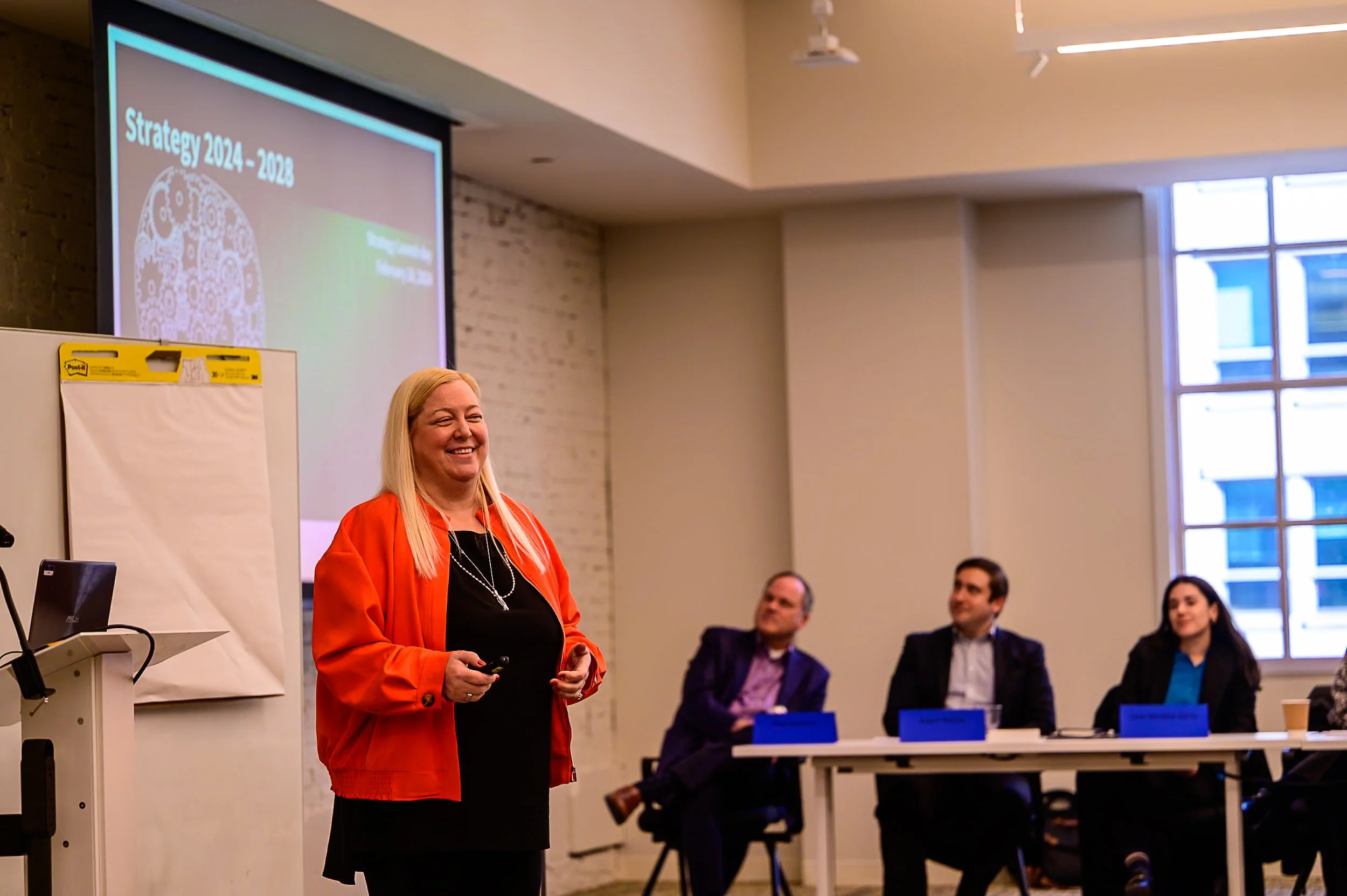
Arlington, VA, June 1, 2026 – Arc Aspicio designed and delivered its Thrive at Work strategic initiative to improve the employee experience as part of its Strategic Plan 2024 – 2028.  This initiative invested in redesigning and implementing new processes that follow new employees and support current employees in their orientation, training, and professional development throughout their career.

Thrive at Work includes several major projects including Orientation Improvement that helps employees follow a journey of learning from day one through day 90, Employee Engagement to connect employees across projects, and Recruiting Improvement to improve how we connect with potential employees and attract them to the company. The initiative also delivered a Company Match process to help consulting employees find opportunities to develop their skills and leadership abilities as they progress through our career levels.

“Thrive at Work benefits new and current employees and translates into exceptional client delivery on complex problem-solving projects with the company’s Government clients,” said Diana Choe, Arc Aspicio Talent Leader. “This has already enhanced the number and quality of opportunities outside of the project for our employees, which enables company-wide collaboration.”

Enhancing orientation to share our culture and values and what it means to provide exceptional delivery for clients and progress in a career in the company was a major focus. On their first day, employees connect with many company leaders and specialists to begin career-long relationships.

Thrive at Work adds to the already robust Integrated Professional Development programs that Arc Aspicio offers to employees, such as peer groups, listening sessions, and Strategy and Learning days.

Arc Aspicio is also pursuing additional strategic initiatives such as process improvement through Generative Artificial Intelligence (GenAI). These initiatives provide training and skill development opportunities for employees to grow along with their teams.

Contact Information
Lynn Ann Casey
Chief Executive Officer
info@arcaspicio.com
1.703.465.2060

About Arc Aspicio

Arc Aspicio creates and delivers integrated and innovative solutions to enhance our nation’s future. As a consulting and solutions company, Arc Aspicio solves problems by applying our integrated capabilities in strategy, human-centered design, human capital, data analytics, and technology. We passionately pursue our vision to be the hub of creativity where people take action to change the world. Our employees use an innovative human-centered approach to collaborate with clients and partners to create tailored, efficient solutions for their customers and promote action to achieve mission results. Join us and our Strategy Innovation Lab (SILab), our knowledge hub with repeatable methods, processes, tools, and techniques, as we create and share ideas to inspire people and accelerate change. Follow Arc Aspicio on LinkedIn @Arc Aspicio @SILabDC and learn more about our company and culture at www.arcaspicio.com.

News Releases Arc Aspicio

Contributors

Arc Aspicio |

Arc Aspicio enhances the future of our nation by creating bold ideas and bringing them to life. A consulting and solutions company, Arc Aspicio solves problems by applying our integrated capabilities in strategy, design, data, human capital, behavioral science, and technology. The company passionately pursues our vision to be the hub of creativity where people take action to change the world. To do this, employees collaborate with clients and partners to create solutions using a human-centered approach. Innovation is not possible without action. The company focuses on strategy first, then takes a hands-on approach implementing ideas to achieve results. Join Arc Aspicio and our Strategy Innovation Lab (SILab) by creating and sharing ideas to inspire people to change the world. Follow us on Twitter @ArcAspicio @SILabDC and, #welovedogs!

Arc Aspicio Implements ‘Thrive at Work’ Program to Enhance Employee Experience

Arc Aspicio Implements ‘Thrive at Work’ Program to Enhance Employee Experience

Arlington, VA, June 1, 2026 – Arc Aspicio designed and delivered its Thrive at Work strategic initiative to improve the employee experience as part of its Strategic Plan 2024 – 2028.  This initiative invested in redesigning and implementing new processes that follow new employees and support current employees in their orientation, training, and professional development throughout their career.

Data Analytics in the Age of AI

Data Analytics in the Age of AI

Giving back is a core tenet of how Arc Aspicio provides Government solutions. By maintaining year-round community partnerships and dedicated leadership for engagement efforts, we create a bridge between the consulting world and the citizens our Federal clients serve every day.

Using AI to Reimagine the Museum Experience

Using AI to Reimagine the Museum Experience

As technology rapidly changes and AI tools and usage increase, there is an opportunity for museums to harness AI, both to improve access to their expansive collections and to improve the visitor experience. For example, the Smithsonian Institution, the world’s largest museum and research complex, holds unparalleled collections, totaling over 157 million artifacts, of which only 1% are on display.  

Countering Deepfake Threats in Emergency Communication

Countering Deepfake Threats in Emergency Communication

Deepfakes are no longer a distant thought but a real-life danger to emergency communications. A fake video of a mayor ordering an evacuation or a cloned voice posing as a 911 dispatcher can derail crisis responses and incite public panic in an instant. Fabricated alerts strike at the core of emergency management by undermining the clear and trusted communications that responders and citizens rely on.

Five Steps to Creating a Culture of Data Literacy in Your Organization

Five Steps to Creating a Culture of Data Literacy in Your Organization

Data literacy has become a core capability for Government agencies seeking to improve informed decision-making, accountability, and public trust. As agencies manage increasingly complex programs and growing volumes of data, empowering staff at all levels to understand and use data is essential to mission success. Building a culture of data literacy calls for intentional investments in access, skills, governance, and incentives. These five steps outline practical, proven ways agencies can strengthen data literacy and embed data-driven practices across their workforce.

Map Your Community's Hidden Resources Before a Disaster Strikes

Map Your Community's Hidden Resources Before a Disaster Strikes

Every neighborhood has untapped skills and resources that become critical during an emergency. Consider the street you live on. Do you know which of your neighbors has medical expertise? If someone owns a generator? Or if anyone can operate a ham radio? Having this information will help your community respond more effectively during the first hours of a disaster, when emergency services are often stretched thin and may not reach everyone immediately.

Building Trust in Government through Accessible Information for the Public

Building Trust in Government through Accessible Information for the Public

More than one in four Americans have a disability according to the Centers for Disease Control and Prevention. Federal compliance with Section 508 of the Rehabilitation Act of 1973 increases the reach of Government by making Federal programs and resources accessible to all. To achieve 508 compliance, digital products must adhere to industry-wide standards for color contrast, alternate text, and PDF tags. 508 compliance is about more than just adhering to regulations – it gives everyone a fair chance to apply for benefits and stay informed.

Using AI to Strengthen Local Jurisdictions Against Human Trafficking

Using AI to Strengthen Local Jurisdictions Against Human Trafficking

Combating human trafficking requires sensitivity to the experiences of victims, whose trauma and fear can make identification and cooperation especially challenging. Significant resources and coordination must be managed across jurisdictions for law enforcement agencies and non-profit organizations to detect and investigate these complex crimes. Because of the significant resources and energy required, small and local jurisdictions often lack the capacity to identify, investigate, and prosecute these crimes.

When Every Moment Counts: How FEMA Works with State, Local, Tribal, and Territorial Stakeholders

When Every Moment Counts: How FEMA Works with State, Local, Tribal, and Territorial Stakeholders

Disaster management is a complex undertaking, one that requires smooth operation across all levels of the Government. The Federal Emergency Management Agency (FEMA) works with a network of emergency managers and other stakeholders before, during, and after natural disasters, including state, local, tribal, and territorial (SLTT) Government agencies. Each SLTT agency’s circumstances are unique, including their knowledge base, budget, resources, and relationships with other Government agencies.

From Checkpoints to Confidence: Building Security Through Public Trust

From Checkpoints to Confidence: Building Security Through Public Trust

Strong border security measures depend on earning the public’s trust and therefore, public cooperation. Recent updates to the Transportation Security Administration (TSA) procedures highlight how small adjustments can have significant impact when it comes to building this trust. Changes such as eliminating the need for passengers to remove shoes or laptops under certain conditions not only reduce delays but also demonstrate responsiveness to the concerns of travelers. These shifts improve efficiency while sending a message: Security can adapt to meet both safety requirements and public expectations.

Culture is the Strategy Engine: Empowering Managers to Lead with Data

Culture is the Strategy Engine: Empowering Managers to Lead with Data

Strategy is a set of decisions about what an organization will – and will not – do to achieve its goals. The larger the organization, the more challenging it is to implement a strategy. A clear, well-understood strategy helps focus resources and effort on an organization’s most important priorities. Culture, however, is the key to making strategy happen, especially in large, complex organizations like the Federal Government.

Picture This: How Information Graphics Tell a Story to Key Stakeholders

Picture This: How Information Graphics Tell a Story to Key Stakeholders

Effective communication is essential for Government program leaders, especially when conveying complex or mission-critical information to stakeholders. While traditional methods like written or spoken updates can fall short, infographics offer a powerful alternative by making data more accessible, memorable, and engaging. By mastering the key principles of infographics in storytelling, leaders can transform stakeholder communication. Using well-crafted infographics not only enhances clarity but also drives stronger project outcomes.

Taking a Human-centered Approach to Address Challenges at our Border

Taking a Human-centered Approach to Address Challenges at our Border

In today’s global landscape – shaped by increased migration, globalization, and evolving security concerns – agencies like U.S. Customs and Border Protection (CBP) must balance national security with the efficient processing of individuals entering the country lawfully. To manage risk and maintain security, CBP can continue to prioritize the needs of travelers who must enter the country quickly by taking a human-centered approach.

Enhancing Homeland Security Operations with GenAI

Enhancing Homeland Security Operations with GenAI

Every month, artificial intelligence (AI) increases in both popularity and capability. AI refers to a computer’s ability to perform automated tasks in a manner that mimics human intelligence. In today’s fast-paced environment, AI provides Federal agencies with a solution to reduce time spent on repetitive tasks (e.g., data entry and analysis) to prioritize complex, mission-critical work.